


DESIGNING THE CONVERSATION
The false simplicity of setting up a retro
Setting up an Agile retrospective seems simple: open a board, create a few columns and ask the team to share what worked, what should improve and what actions they will take into the next sprint.
But a good retro does not happen by chance. It needs a clear intention, a suitable structure and an honest reading of the moment the team is going through.
A team exhausted after an intense sprint does not need the same session as one that needs to sort priorities, unlock tensions or celebrate progress.
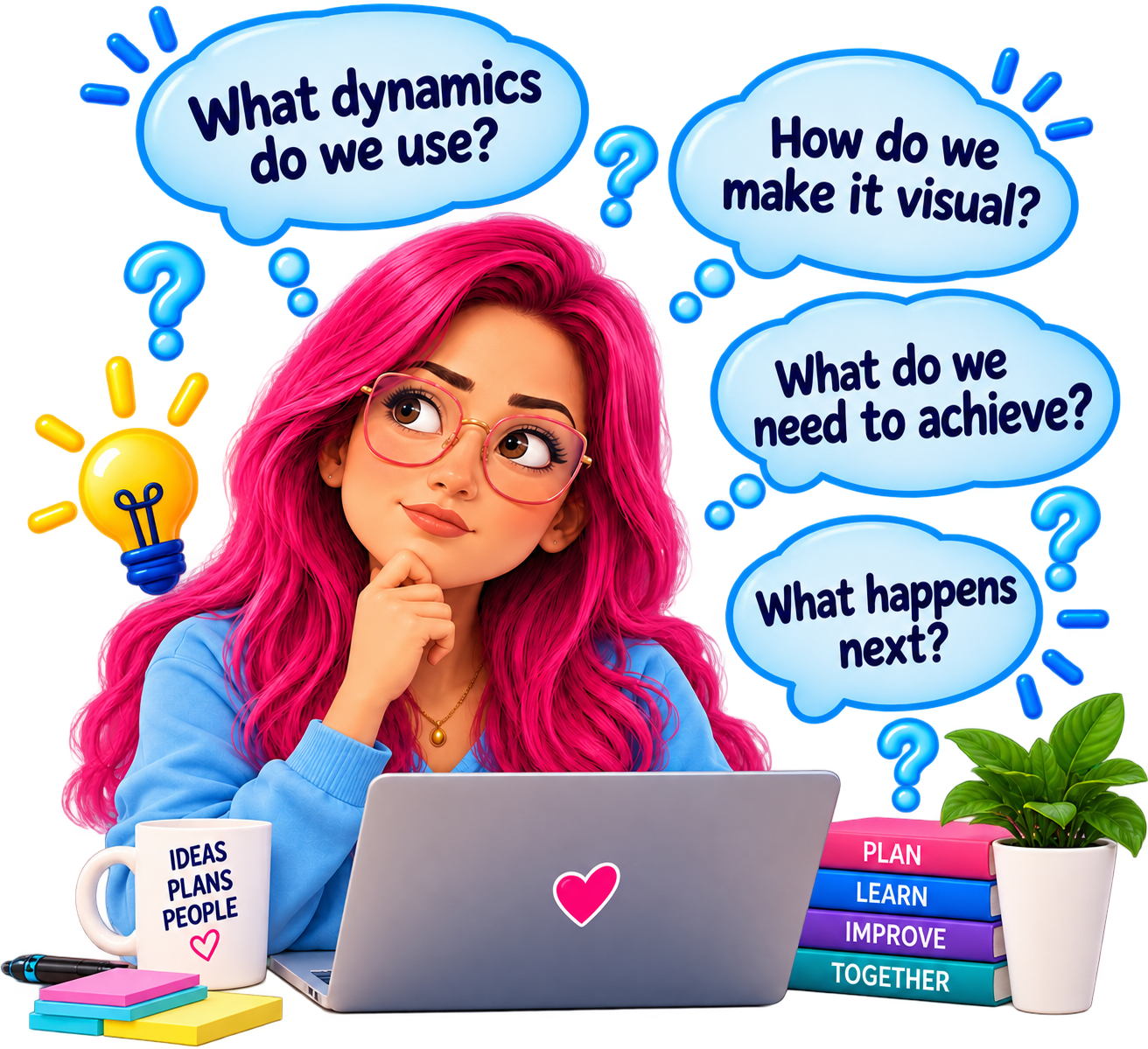
A retro is not just about preparing a dynamic. It is about designing the conversation the team needs to have.
Before opening the board
These five questions help choose the dynamic, the level of depth and the expected outcome:
- Conversation
What does the team need to talk about right now?
- Depth
How deep should we go in this session?
- Energy
What mood and energy level is the team bringing?
- Outcome
What decision or learning should come out of the retro?
- Follow-through
How will the conversation turn into concrete actions?
If these questions go unanswered, the retrospective can end up as a collection of opinions. When the purpose is clear, conversation becomes learning and learning can become action.
The problem: why a single AI falls short
A single AI can generate a complete retrospective if we ask it to. It can propose a dynamic, write instructions, suggest a structure and even prepare a facilitation script.
The problem is that, in a single conversation, it ends up mixing too many roles.
The risk
Context overload
It is thinking as a strategist, facilitator, dynamic designer, copywriter, visual designer and ceremony manager at the same time.

- Too many roles in one conversation.
- Context that gets lost as decisions and corrections pile up.
- Hard to review, iterate and customise each part.
The AI can forget details, mix up criteria or drift back to earlier versions.
The result
Lower quality
The result may be correct, but it tends to be generic or inconsistent.
- Correct answers but without nuances close to the team.
- Generic result that is hard to adapt to the real conversation.
- Works as a draft, not as a final deliverable.
A generic deliverable needs manual review and rewriting.
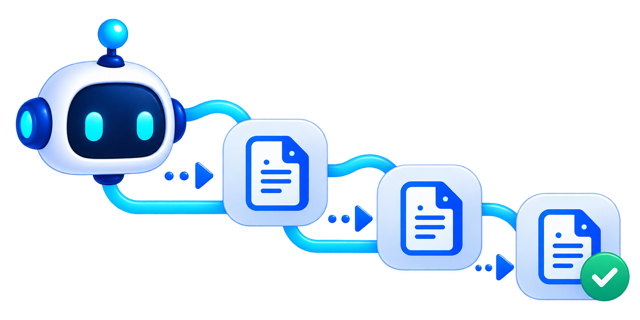
That is why, instead of asking a single AI for everything, I started working with a chain of agents.
Also, this approach improves traceability and lets you adjust each part of the process without redoing everything. If the dynamic does not fit, you can change just that part. If the board needs more examples, the visual agent reviews it. And so each deliverable is more useful, more polished and better adapted to the team.
My approach: a chain of specialized agents
The alternative is to divide the process like a production line: each agent has a concrete role, brings its own experience and hands the work over to the next one.
-

Initial idea
The team's need and the starting point.
-

Retro Director
Defines the goal and the structure.
-

Agile Dynamics
Proposes the most suitable dynamic.
-

Visual Design
Turns the retro into a clear, attractive board.
-

Retro Scriptwriter
Prepares instructions, copy and the session guide.
-

Ceremony Manager
Reviews, integrates and prepares the wrap-up.
-

Retro ready
A complete, actionable experience.
Each agent brings its own talent. Together we get further.
What is a Mixture of Agents (MoA)?
A Mixture of Agents (MoA) is an approach where several specialized agents collaborate, each with its own expertise, to solve a complex goal.
In our case, we use a sequential flow, but we can also introduce moments of collaboration between agents. For example, having the visual agent review the dynamic together with the facilitation agent.
This combination makes it possible to get better results, more aligned with the team's context and easier to maintain and improve.

What each agent delivers
Each stage leaves a deliverable ready for the next one.
| Agent | Deliverable | Exit criterion |
|---|---|---|
|
Retro Director
|
Retrospective brief. | Goal, audience and duration defined. |
|
Agile Dynamics
|
Selected dynamic. | Steps and timing adapted to the team. |
|
Visual Design
|
Visual board. | Clear hierarchy, ready to facilitate. |
|
Retro Scriptwriter
|
Facilitation script. | Complete instructions and transitions. |
|
Ceremony Manager
|
Final retro kit. | Reviewed, coherent pieces ready to use. |
Examples of agent-generated retros
The same structure, endless themes. With the help of AI you can create retros adapted to your team and context.
It is not about always doing the same thing under a different costume, but about designing experiences that keep the essence of the retro.
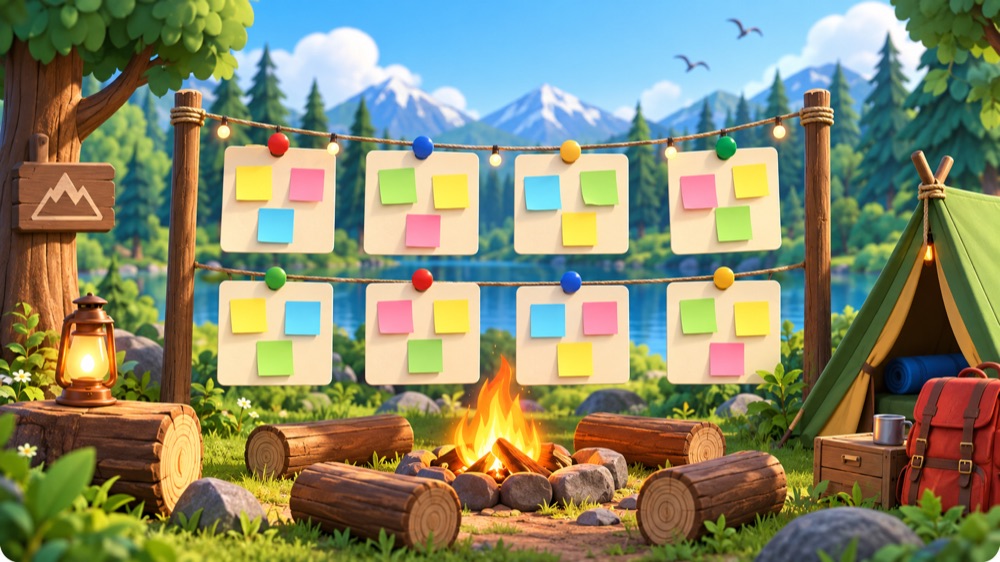
Summer camp
A retro to close the cycle with a spirit of adventure.
What you can vary
- Outdoor dynamics
- Playlist and atmosphere
- Props: maps, flashlights, etc.
Ideal for end-of-quarter wrap-ups or right before the holidays.
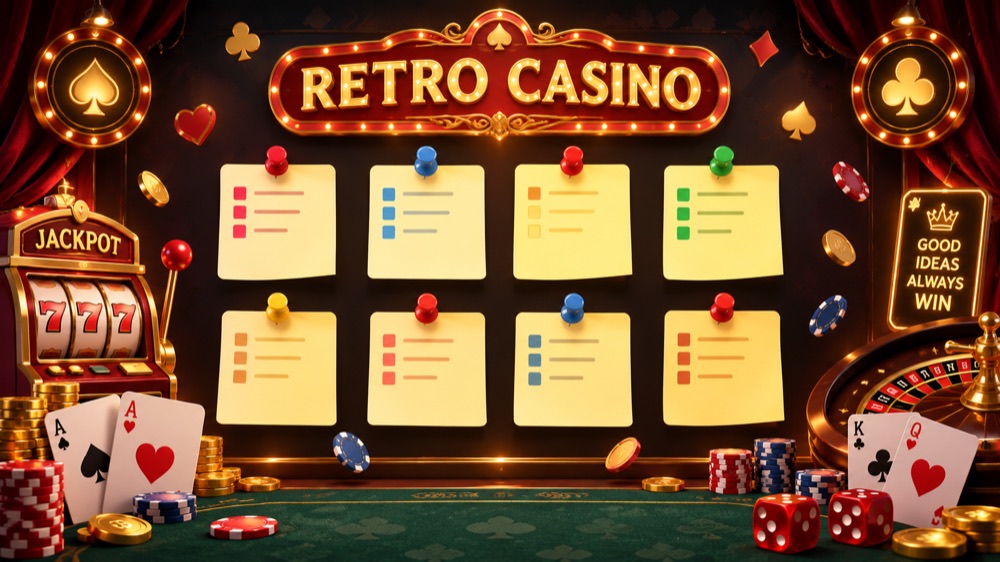
Casino
Because every experience counts.
What you can vary
- Roulette-style dynamics
- Casino music and atmosphere
- Props: cards, chips, a board.
Perfect for energizing the team and turning reflection into a game.
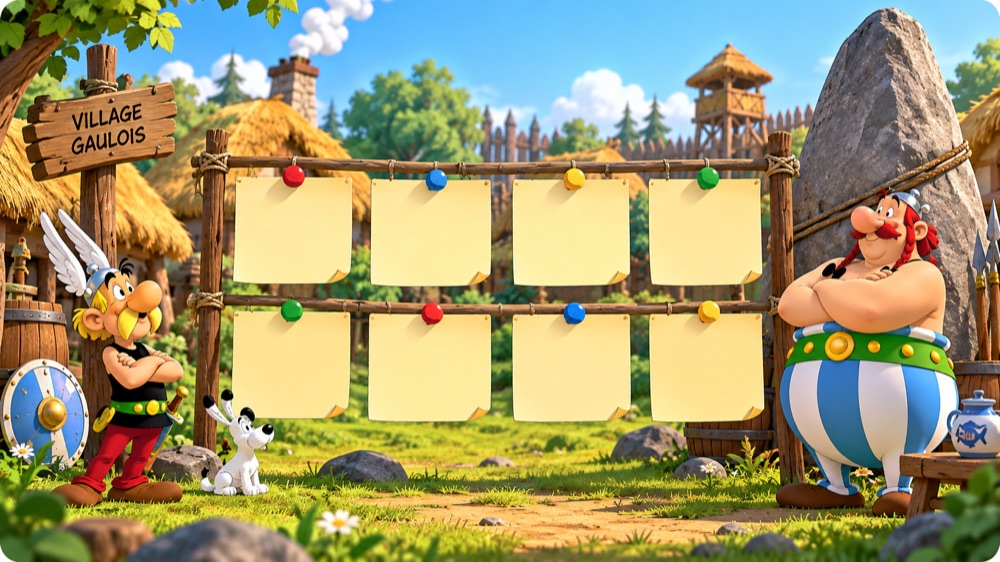
Collaborative village
Shared ideas to build agreements.
What you can vary
- Collaborative dynamics
- Epic, motivating music
- Props: scrolls, sticky notes, etc.
Ideal for strengthening trust and aligning next steps.
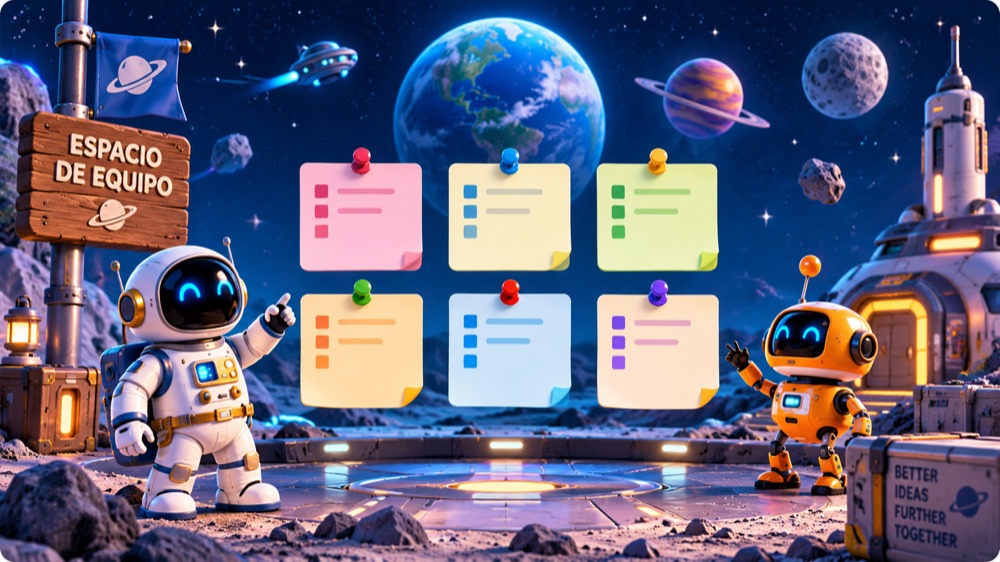
Team space
A retro to look at the future with ambition.
What you can vary
- Future-focused dynamics
- Space or lo-fi playlist
- Props: badges, blueprints, 3D objects.
Perfect for defining next steps and dreaming big.
Use AI as a creative partner
Tell it about your team's context: goal, culture, size and format. Then ask it for ideas for themes, dynamics, props and music.
You can ask it to adapt a known dynamic or to propose a brand new one, for a completely different experience.
"Give me a beach-themed retro idea for a remote team of 8 people, with different dynamics and recommended music."
New ideas. The same drive to talk.